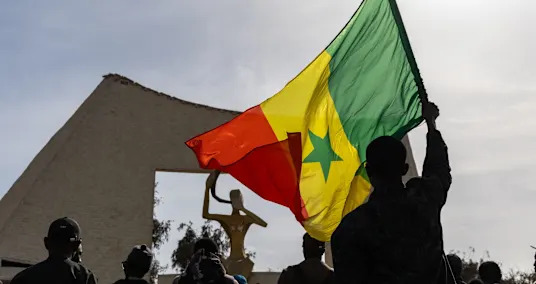
Senegal's President Bassirou Diomaye Faye has signed a new law doubling to 10 years the maximum prison term for sexual acts by same-sex couples.
The new law also criminalises the "promotion" of homosexuality, which includes any public representation and financial support by individuals or organisations, and provides for three to seven years in prison for those found guilty.
The legislation was a campaign promise of President Faye and Prime Minister Ousmane Sonko and was approved by parliament last month.
UN rights chief Volker Türk has described it as "deeply worrying", saying that the anti-LGBT legislation "flies in the face of sacrosanct human rights".
The UN official and rights groups had urged the president not to sign it into law, but the government dismissed the international criticism, arguing that the measures reflected the views of Senegalese people.
It was taken to parliament after a wave of arrests over alleged same‑sex relationships, which were already banned under Senegalese law.
In February, 12 men, including two public figures and a journalist, were arrested and charged with "acts against nature".
Campaign group Human Rights Watch has recently noted a rise in "hostility toward LGBT people", adding that MPs had twice – in 2022 and 2024 - unsuccessfully sought to raise jail terms and penalties against same-sex relationships.
The new law was passed by an overwhelming majority in the National Assembly on 11 March, with 135 MPs voting in favour, none against and three abstaining.
Several other African countries have also introduced tough new laws against the LGBTQ+ community in recent years.
In September last year, Burkina Faso's transitional parliament approved a bill banning homosexual acts, following its neighbour Mali in 2024.
In 2023, Uganda voted in some of the world's harshest anti-homosexual legislation, meaning that people engaging in same-sex relationships can be sentenced to death in certain circumstances.
Ghana is also planning to re-introduce an anti-homosexual bill that activists say threatens basic human rights, safety and freedom.
You may also be interested in:

Go to BBCAfrica.com for more news from the African continent.
Follow us on Twitter @BBCAfrica, on Facebook at BBC Africa or on Instagram at bbcafrica
BBC Africa podcasts
latest_posts
- 1
 Washington resident is infected with a different type of bird flu
 - 2Finding China: Four Urban areas for a Remarkable Excursion
- 3Must-Have Cooking Machine in Your Kitchen
- 4I read 115 books this year. 'Wuthering Heights,' 'Heart the Lover' and 'The House of My Mother' were among my 10 favorites.
- 5Fossils unearthed in Morocco are first from little-understood period of human evolution


- Affordable Care Act enrollment is slightly ahead of last year, despite expiring subsidies
- Ski Resorts Universally: A Colder time of year Wonderland Guide
- Why do people get headaches and migraines? A child neurologist explains the science of head pain and how to treat it
- Find the Standards of Viable Nurturing: Supporting Blissful and Strong Kids
- Pfizer says patient dies after receiving hemophilia drug in trial
- German unemployment rate falls to 6.4%, but 3 million still jobless
- Weight-loss pill approval set to accelerate food industry product overhauls
- Birutė Galdikas: The last of the ‘angels’ in primatology’s most extraordinary chapter
- The Magnificence of Extraordinariness: Presenting Valuable Adornments and Gemstones